
Every briefing starts the same way. Someone asks, before we have even zipped the snowmobile suits: “Will we see a polar bear?” After years of guiding out of Longyearbyen my honest answer is that the Arctic keeps no timetable. It does reward people who know where and how to look.
Svalbard holds very few species, and that is what makes it legible. Every animal here is a specialist, shaped by darkness, sea ice and a food chain that runs almost entirely through the ocean. Learn five of them and the rest of the archipelago starts to make sense.
The Svalbard Big Five
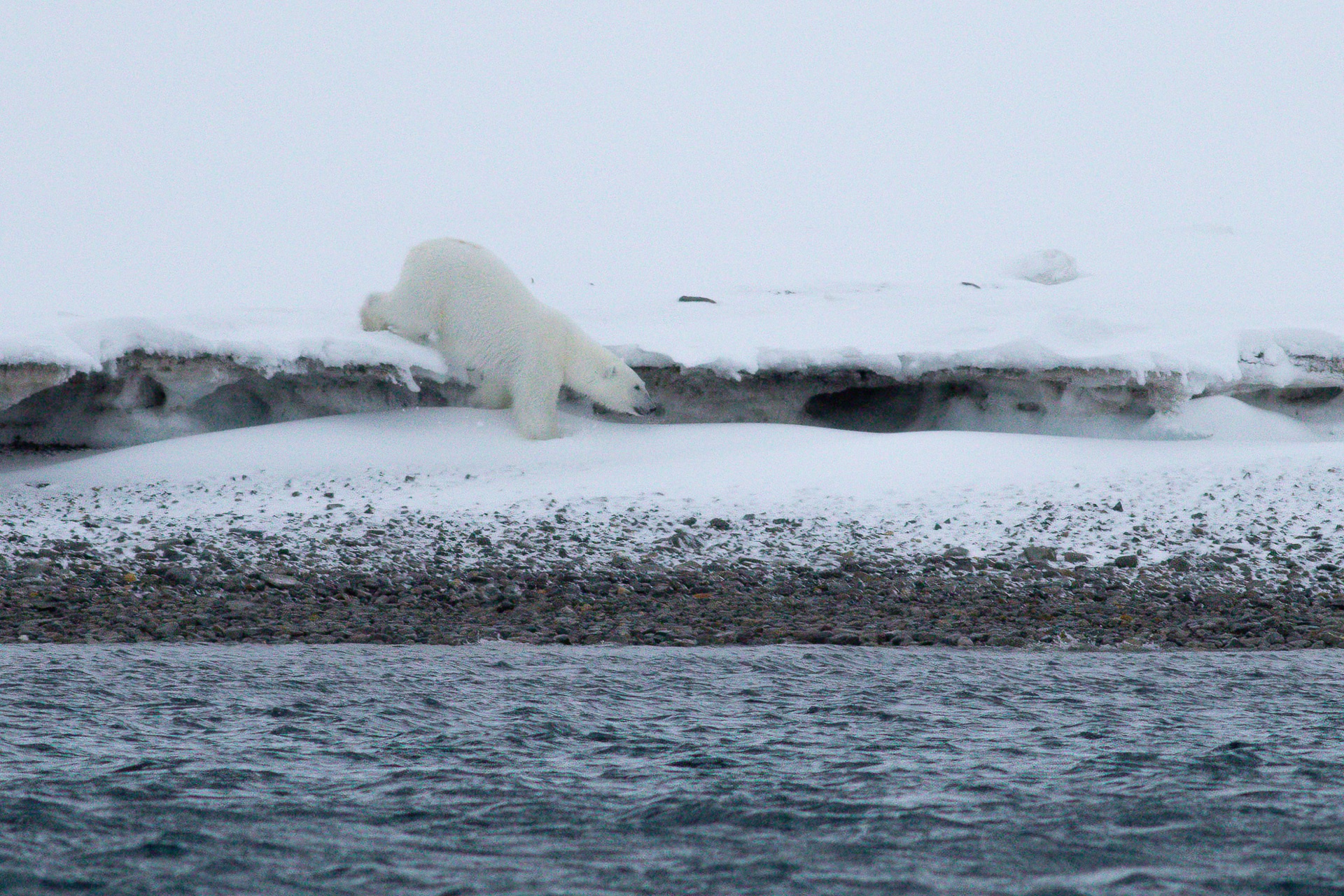
Polar bear, king of the Arctic
This is the obvious one. It is on the road signs at the edge of town and in everyone’s mind on the flight in.
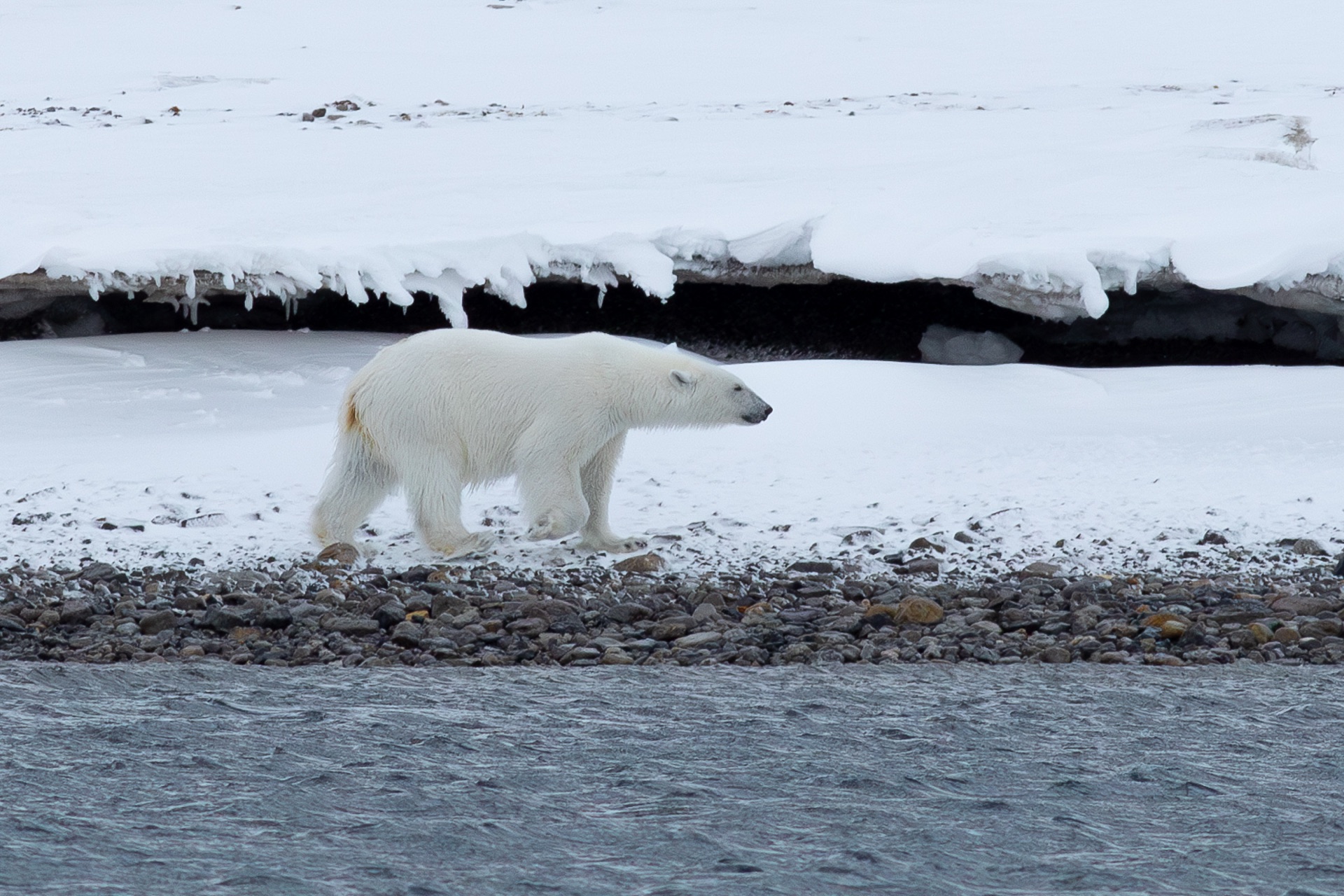
- Roughly 300 bears use the Svalbard-local area, part of a Barents Sea population of around 3,000 shared with the Russian Arctic.
- They are sea-ice hunters, and their staple is the ringed seal taken at breathing holes. The technique is patience. A bear can stand motionless over a hole for an hour, then move faster than anything that size has a right to.
- Bears wander into the settlement zone when the ice retreats and seal hunting fails, investigating bins, dog yards and cabins. That boundary is a real line, not a suggestion.
- Polar bears are fully protected: approaching, luring or disturbing one is illegal, and the Governor (Sysselmesteren) enforces it. Outside the settlements everyone carries polar-bear protection. Our guides are armed and trained, and the rifle is the last link in a long chain of avoidance. More in Safety and Polar Bears.
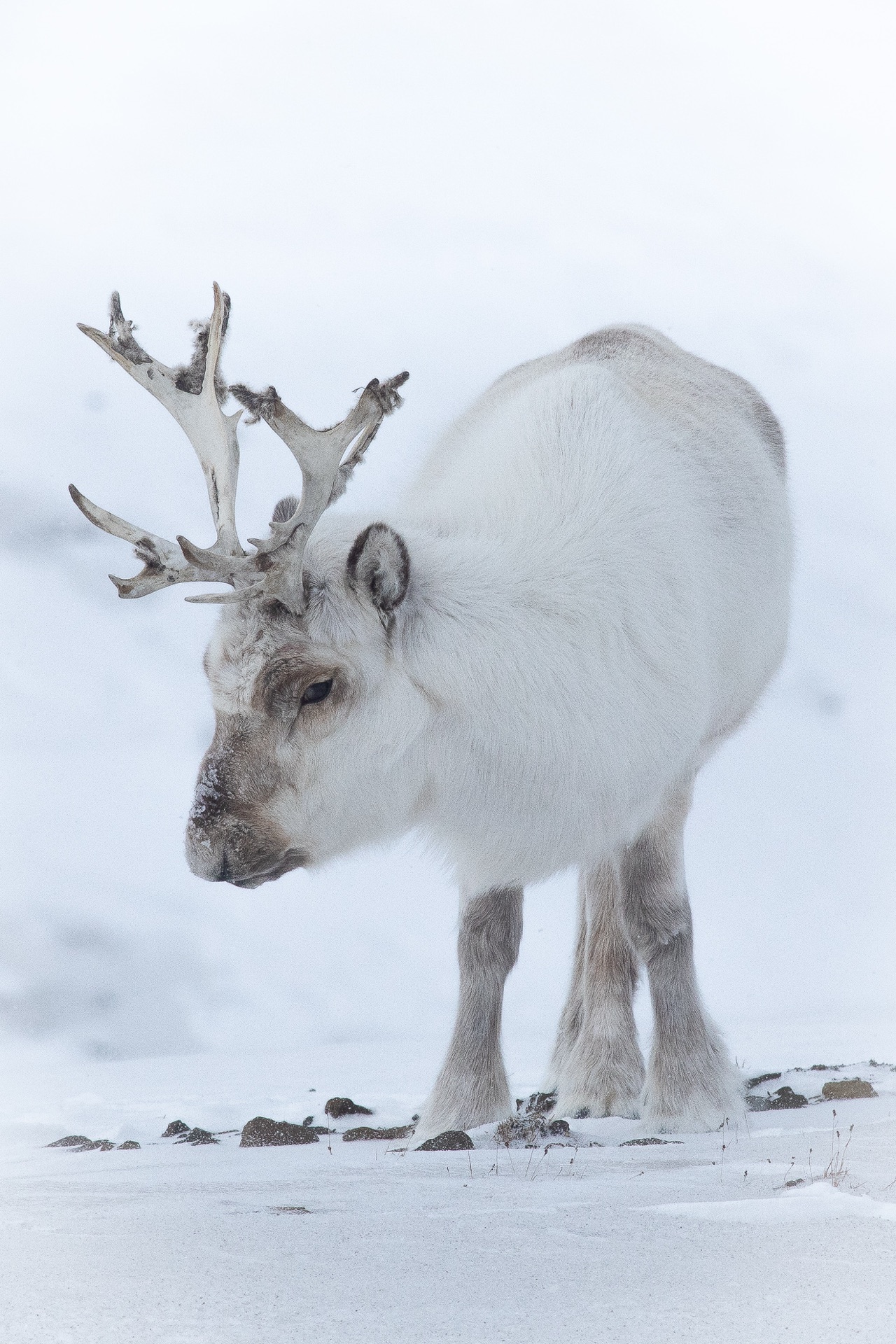
Svalbard reindeer, the stocky endemic
The Svalbard reindeer is an endemic subspecies found nowhere else on Earth, and it looks like it was drawn by someone who had only had a reindeer described over the phone.
- Short legs, barrel body, rounded muzzle. Every line reduces the surface area that leaks heat.
- With no natural predators, they are astonishingly calm. They lift their head, decide you are not interesting, and go back to grazing.
- Through autumn they build enormous fat reserves, then spend winter digging craters through wind-slab for frozen moss and lichen. A hard icing event kills them, not the cold.
- They graze right inside Longyearbyen, between the houses, beside the school, on the old mining terraces.
On our snowmobile runs through Reindalen with MyArctic we pass small groups out on the open valley floor, steam rising off their backs at −20°C.
Arctic fox, the opportunist
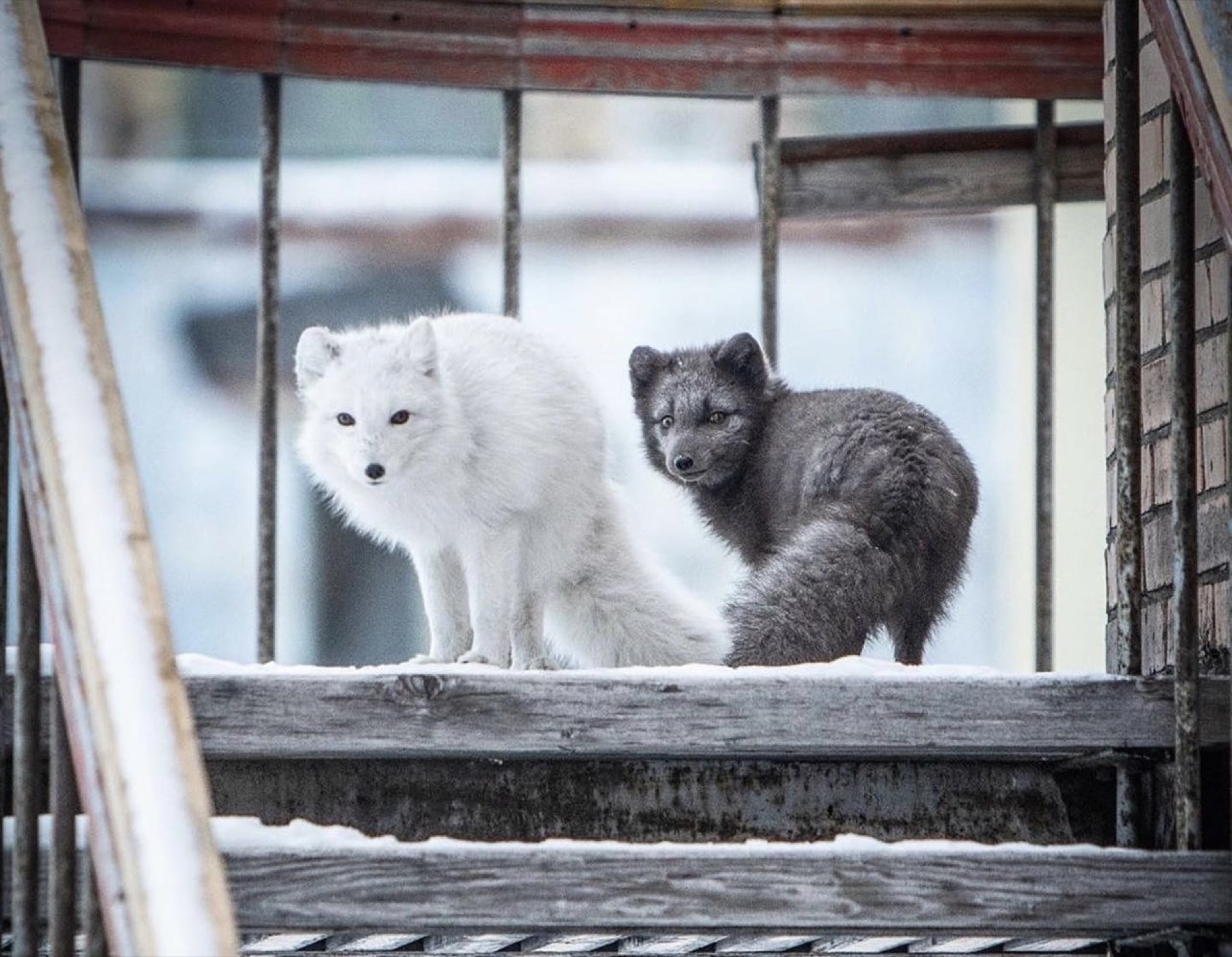
- There are two colour morphs. The common white morph turns brown-grey in summer; the rarer blue morph stays smoky charcoal all year.
- In winter foxes shadow polar bears across the ice, waiting at a distance for scraps from a seal kill. Collared animals have been tracked hundreds of kilometres over sea ice.
- Dense layered fur and a flexible metabolism let them tolerate around −50°C without shelter. Curled nose-to-tail in a snow hollow, a fox is a very efficient thermos.
- Summer flips the diet entirely: eggs and chicks raided from the cliffs and cached for the lean months.
Our Wildlife Walk in Bjørndalen is where foxes turn up most reliably, usually as a flicker on a scree slope that three people miss before someone spots it.
Walrus, you smell them first
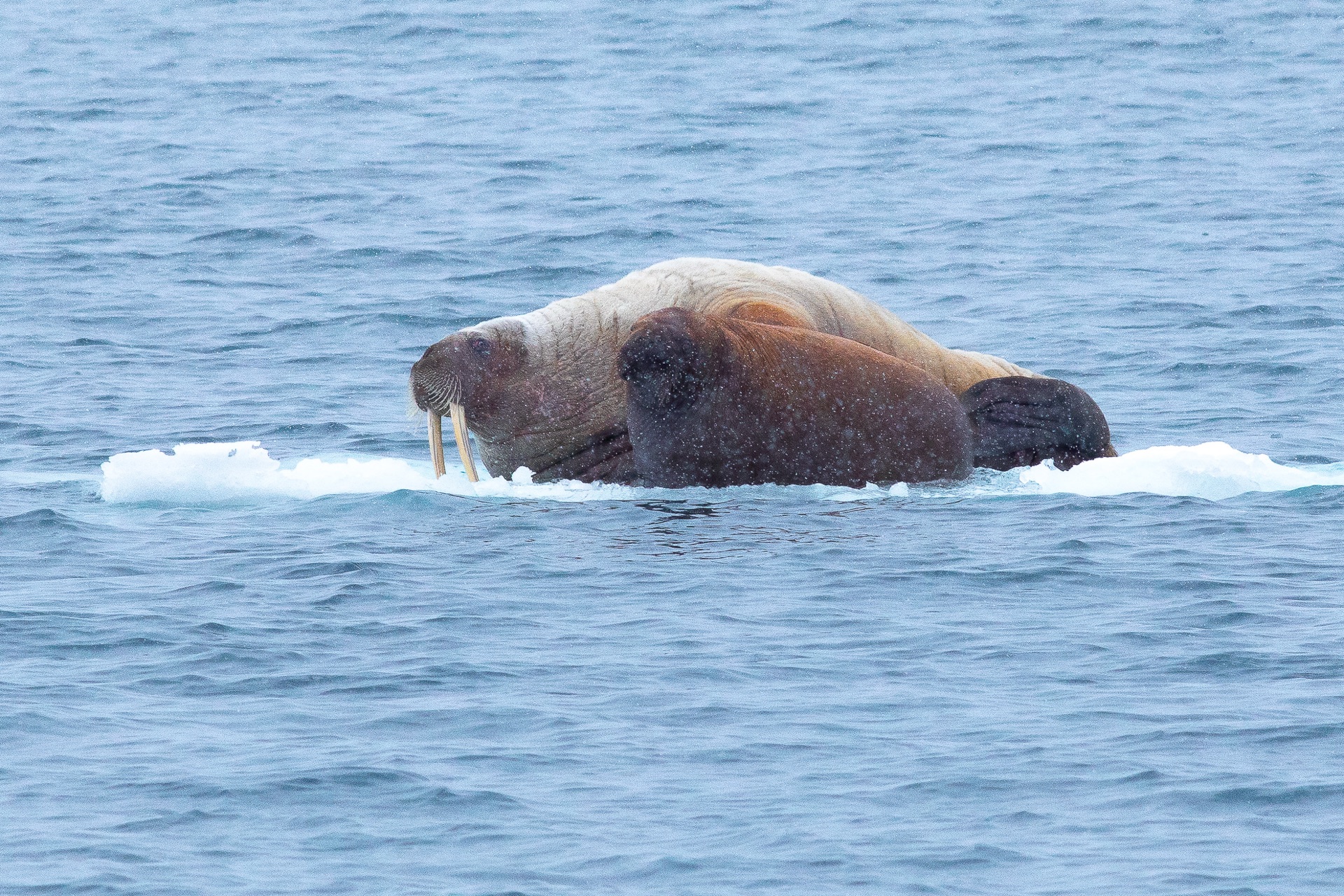
- Walrus gather in haul-outs, dozens of bodies stacked on a gravel beach, and I will say it plainly: you smell a haul-out long before you see it.
- Hunters here had taken them to near-extermination by the early twentieth century. They were protected in 1952, and the recovery since is a genuine conservation success.
- Large males exceed 1,200 kg. Tusks lever the body onto ice and settle rank arguments; the whiskers find clams on a dark seabed.
- They are approachable only from the water, at distance, engine down, as on our VIP Walrus Safari. In May and early June sea ice sometimes puts the beach off-limits. That is the Arctic, not a booking error.
Birds, the noisy majority
Svalbard’s summer belongs to seabirds, and the cliffs are where you grasp that this whole ecosystem is powered by the sea.
- Atlantic puffins, fewer than on mainland Norway, nesting in cliff crevices rather than burrows.
- Little auks, the sound of Svalbard summer, in vast colonies in the scree of Platåberget, pouring off the mountain in chattering clouds.
- Arctic terns, which dive-bomb anyone near a nest, and they mean it. Raise an arm or a pole above your head and walk away calmly.
- Brünnich’s guillemots, packed shoulder to shoulder on the ledges at Alkhornet and Fuglefjella, each laying one pear-shaped egg on bare rock.
- Ivory gull, a rare all-white high-Arctic specialist that follows bears and ice edges.
- Svalbard rock ptarmigan, the only bird that overwinters here, with fully feathered legs that work as natural snowshoes.
Marine mammals seen from the boat
From June to September the fjords open and the view shifts to the water surface. Beluga whales are usually the first whale people see here, white and small-headed, in tight pods near shallow bays and river mouths. Minke whales are the regular Isfjorden visitor, a low dark back and a fast blow. Blue and fin whales, the giants, feed out along the shelf edge, and they are rare. On the floating ice you find bearded seals, big and whiskered and unbothered, their descending spring trill carrying through a boat hull — and ringed seals, the smallest and most numerous of them, the reason polar bears exist here at all.
On the Catch of the Day cruise and the Kayaking Along Glacier trip we watch the water between the floes as closely as the glacier front.
How we observe wildlife safely on our tours
This is the method, not a disclaimer bolted onto the end.
- Distance rules come first. We keep well back from bears, haul-outs and nesting birds, and we position so the animal always has an escape route. If its behaviour changes because of us, we are too close.
- We never feed anything. A fed fox is a dead fox, and a food-conditioned bear becomes a lethal problem for the next person who meets it.
- The Governor’s regulations are binding. Disturbing polar bears is illegal. Minimum distances and seasonal restrictions apply to other species and to protected areas. We follow them because they work.
- Drones are effectively out. They are heavily restricted across Svalbard, banned near settlements and protected areas, and they panic colonies outright.
- We do not chase sightings. Racing across a fjord toward a distant bear is harassment, it is illegal, and it puts a group on unknown ice.
- No guarantees, ever. Wildlife presence can never be promised. I would rather you went home with a genuine encounter than a manufactured one.
Best season by animal
| Animal | Best months | How we see it |
|---|---|---|
| Polar bear | Mar–May (ice), Jul–Sep (coast) | Snowmobile at distance / boat |
| Svalbard reindeer | Year-round | Snowmobile, hike, even in town |
| Arctic fox | Feb–Apr (white coat), Jun–Aug | Hike / snowmobile |
| Walrus | Jun–Sep | Boat only |
| Seabird colonies | May–Aug | Boat / hike |
| Beluga and minke whales | Jun–Sep | Boat |
| Bearded and ringed seals | Mar–May on ice, summer in water | Snowmobile / boat |
FAQ
Will I definitely see a polar bear?
No, and anyone who promises it is selling you something. Bears follow the ice, and the ice follows the weather. Spring snowmobile trips and summer boat trips give the best odds.
Is it safe to walk outside Longyearbyen alone?
Not without polar-bear protection and the training to use it. Outside the settlement you need a rifle and flare gun. See Safety and Polar Bears.
When are the bird cliffs at their best?
Late May to early August, peaking in June and July. By late August the ledges empty fast.
Do reindeer or foxes come close?
Reindeer often graze within a few metres of you in town and simply ignore people. Keep your distance anyway, never feed them, and give foxes a wide berth. Svalbard foxes can carry rabies.

If you want to see this country the way it actually works, reading tracks on the ice, holding a respectful distance, letting the animals set the pace, come out with us. Our small-group snowmobile expeditions, boat safaris and tundra hikes with MyArctic are led by SGO-certified guides who live here year-round. Still planning? Start with How to Get Here & Where to Stay.