The Field Guide to Svalbard & Spitsbergen
I live in Longyearbyen, at 78° North, and I spend my working days leading people across frozen fjords, into glacier ice caves and along bird cliffs. Everything on this site is what I would tell you over a coffee before we set off. No brochure language, just what the archipelago is actually like.
Why trust this guide
This site is written by a certified local guide who lives in Longyearbyen, not by a travel desk in Oslo. I hold SGO (Svalbard Guide Training) certification, I carry the rifle, GPS and satellite communicator that the Governor’s rules require outside the settlements, and I physically lead the snowmobile, boat, ice-cave and hiking expeditions I describe here.
That matters more than it sounds. Conditions on Svalbard change from year to year and sometimes from morning to afternoon: an ice cave that was walkable last March may have collapsed its entrance by this one; sea ice can close a walrus beach in early June. Pages here are updated from the field, not from last season’s press release. Where something is uncertain, I say so rather than smoothing it over.
The one promise I never make is wildlife. Polar bears, walrus and the aurora do not read schedules, and any operator who guarantees them is selling you something they cannot deliver.
Start here
About Svalbard
The archipelago drifted roughly 400 million years from near the equator, which is why you can find fossils of tropical plants under a glacier. Read about the discovery of Spitsbergen by Willem Barentsz in 1596, the whaling and trapping eras, the geology, the Big Five and the ~170 vascular plant species that survive a six-to-eight-week growing season.
Practical info
There are no direct international flights: you connect through Oslo or Tromsø. Svalbard sits outside Schengen, though you may still need a Schengen visa to transit mainland Norway. This section covers flights, accommodation, winter versus summer packing, and the polar-bear safety rules that govern every step outside town.
Tours
Which tour suits you depends less on your fitness than on your dates. Snowmobiles need snow and a valid physical driving licence; boats need open water; ice caves need a frozen, stable glacier. This page maps the real season windows against what is bookable.
Svalbard at a glance
| Location | 74–81° N, between mainland Norway and the North Pole |
| Land area | ~61,000 km² |
| Residents | ~2,500, mostly in Longyearbyen, 50+ nationalities |
| Glacier cover | ~60% of the land |
| Polar night | ~mid-November to end of January |
| Midnight sun | ~20 April to 22 August |
| Currency | Norwegian krone (NOK) |
| Visa | None required for Svalbard itself under the Svalbard Treaty |
Seasons in one minute
- Polar night (mid-Nov–end Jan). The sun never rises. Blue twilight at noon, headlamps all day, the best odds for aurora over town.
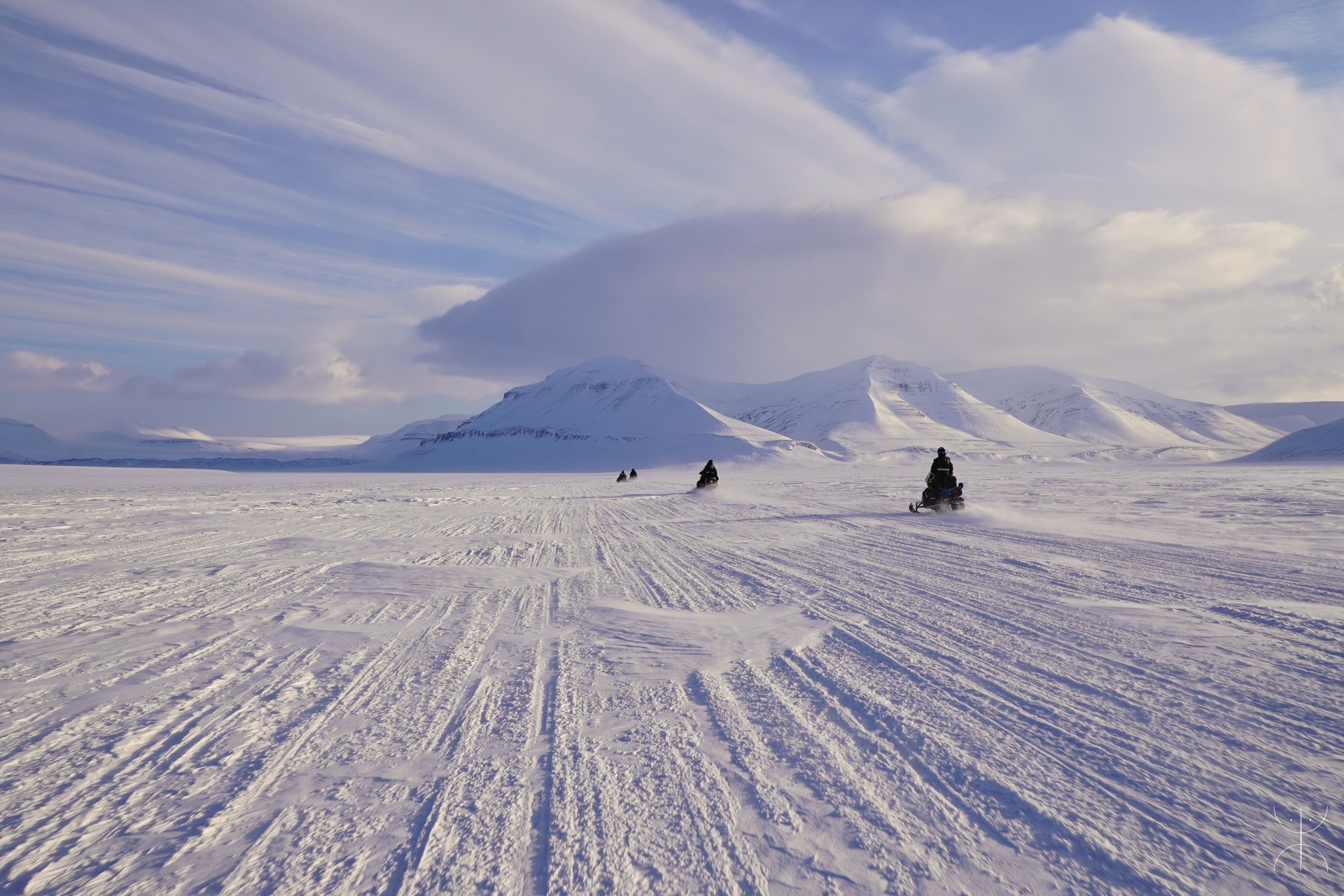
- Snowmobile spring (Feb–early May). The archipelago opens up. Frozen fjords become roads, ice caves are at their most stable, light returns fast.
- Midnight-sun summer (~20 Apr–22 Aug). Continuous daylight, green tundra by July, boats to glacier fronts and bird cliffs from June to September.
- Autumn shoulder (Sept–Oct). The light drains away week by week, the first snow settles, tourism thins out and the tundra turns rust-red.
Heading beyond Longyearbyen?
Longyearbyen ends abruptly. A few hundred metres past the last house you are in polar bear country, where the law requires protection and experience decides how the day goes. That is the line where a guide stops being a luxury.
My wife and I founded MyArctic, a local company based here in Longyearbyen: armed and SGO-certified guides, small groups, expedition clothing provided so you are not buying a snowmobile suit you will wear once. Winter snowmobile expeditions, glacier ice caves, summer boat safaris and, if you want the strangest night of your life, sleeping inside an ice cave.