Every week someone writes to us asking when they should come. My honest answer is always a question back: what do you want to see? Svalbard has no “average” month. In February you drive a snowmobile under a pink sky at −20°C. In July you stand on a boat deck in a light jacket at two in the morning while the sun circles above the glacier. Both are Svalbard, and they have almost nothing in common.
This page is how I explain the year to guests before they book flights. It is based on living and guiding here, not on a climate table.
The four light seasons
Forget spring, summer, autumn and winter. Up here at 78° north, the year is organised by light, and light decides what you can do.
| Period | Light | What it’s good for |
|---|---|---|
| Mid-Nov – end Jan | Polar night: no sun, dark even at noon | Northern lights, daytime aurora, the atmosphere of a town in darkness |
| Feb – mid-Apr | Returning sun, long blue twilight | Snowmobile expeditions, dog sledding, ice caves, aurora until about March |
| Late Apr – late Aug | Midnight sun: 24-hour daylight | Boat trips, walrus, bird cliffs, hiking, kayaking |
| Sep – Oct | Fast-shrinking days, first snow | Quiet landscapes, early aurora, autumn hiking |
The sun actually drops below the horizon in late October and does not come back until mid-February. The deepest part of that, when there is no bright twilight even at midday, runs from mid-November to the end of January.
Winter: polar night (November to January)
This is the season people either fall in love with or find hard. Longyearbyen is lit by streetlamps, snow reflects every bit of light, and on a clear day at noon the sky over Adventdalen turns deep navy rather than black. Temperatures sit anywhere between −5°C and −25°C, and the wind matters more than the thermometer.
What works in the polar night:
- Northern lights, including the rare daytime aurora you can only see this far north. Read more in our northern lights guide.
- Short trips by car into the valleys, away from town lights.
- Dog sledding with headlamps, depending on snow conditions.
- Museums, the Svalbard Museum and a slow pace in town.
What doesn’t: long snowmobile expeditions to the east coast are not what you want in full darkness, and there is no wildlife photography in the usual sense. You’re here for the sky and the atmosphere.
With MyArctic we take small groups out on Northern Lights by Car evenings in a heated minivan, which is the most comfortable way to wait for the sky when it’s −20°C outside.
Late winter and spring: the best months for snow (February to April)
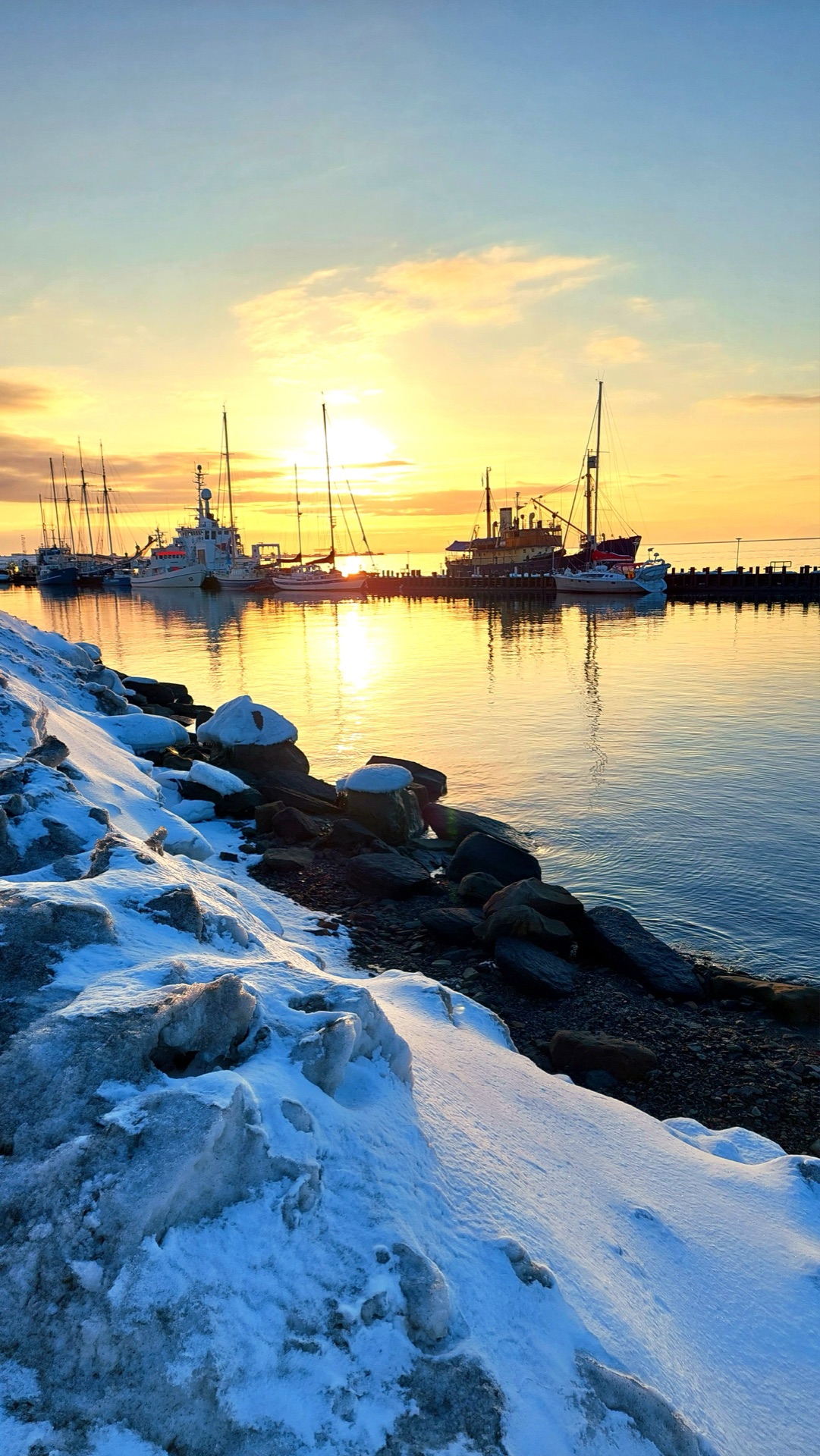
If you ask me for one window, this is it. The snow is deep, the fjords can still be frozen, and the light comes back fast: in February you get a few hours of blue light around noon, by April you have light almost around the clock.
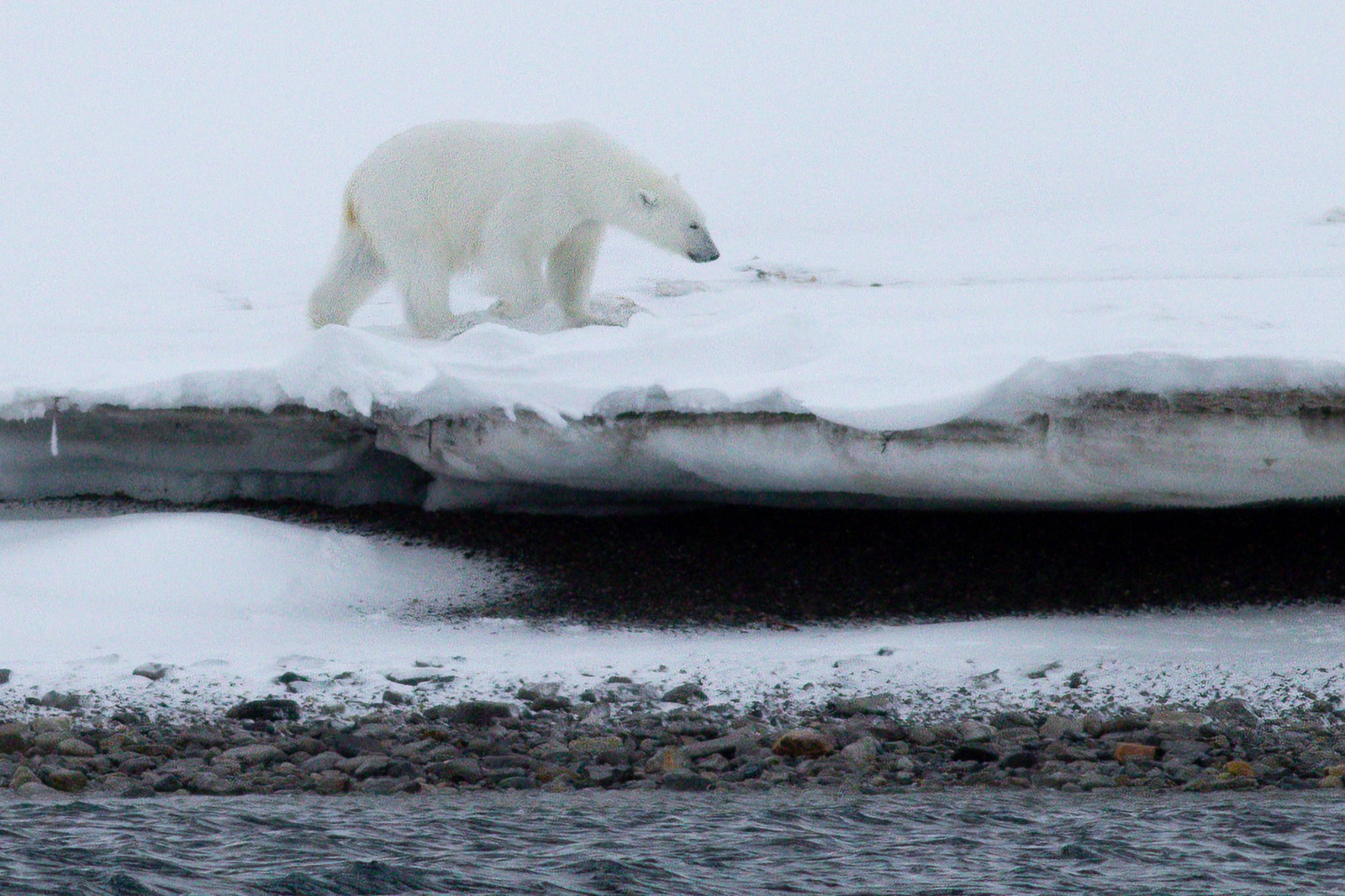
In early March, the sun finally reaches Longyearbyen itself. The town celebrates with Solfestuka, the sun festival week, and people stand on the steps of the old hospital waiting for the first rays. It sounds sentimental until you’ve lived through three months without them.
This is the core of the season for:
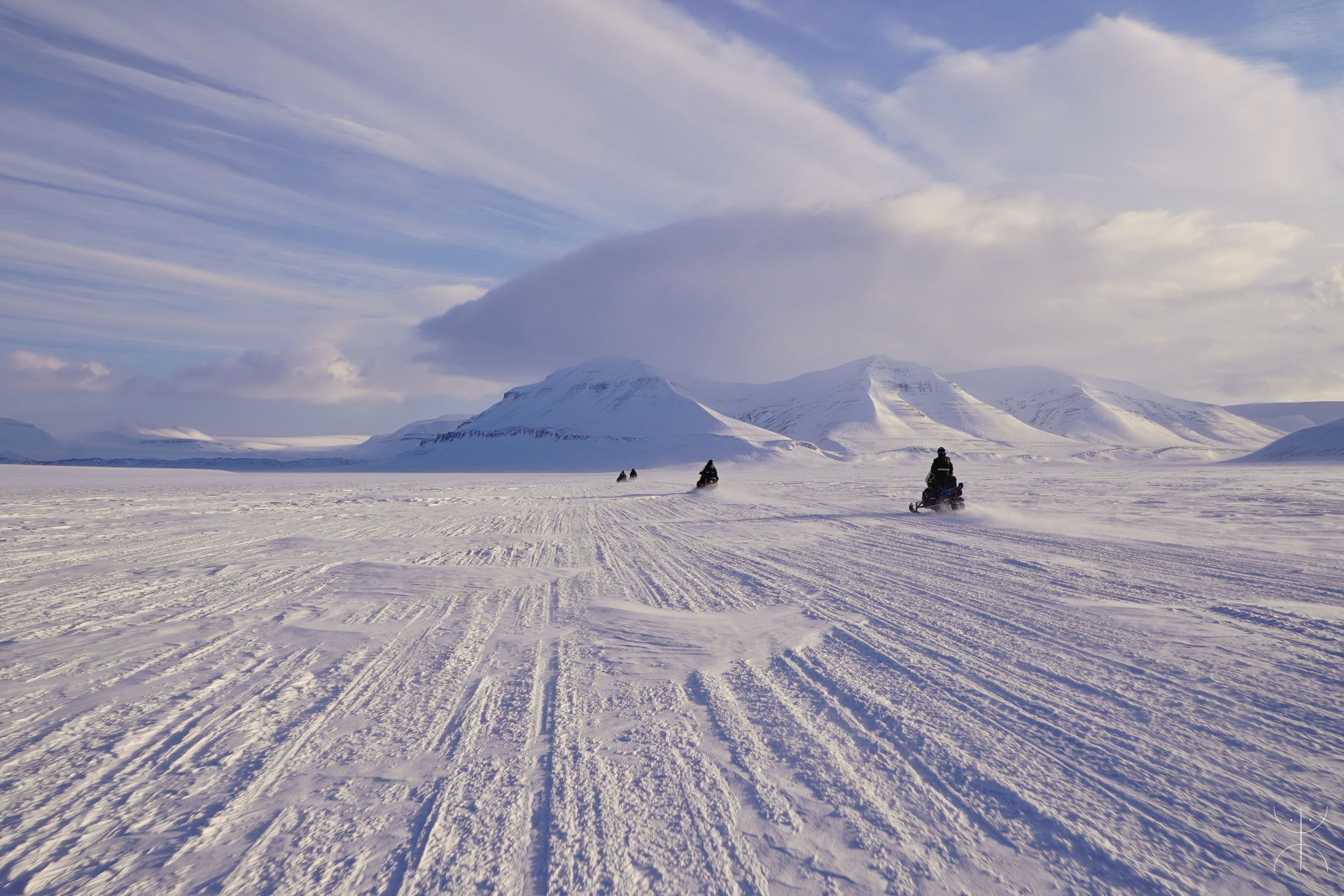
- Snowmobile expeditions, from a half-day to the east coast and back. Our snowmobile guide explains the routes and what a day looks like.
- Ice caves inside glaciers, which are only safe to enter when meltwater channels are frozen. See what to expect in an ice cave.
- Dog sledding on proper snow.
- Northern lights on clear nights until roughly late March, when the nights become too bright.
Temperatures in February and March are often −15°C to −25°C on the trail, and colder with wind chill on a moving snowmobile. By April it’s usually milder and the light is soft and golden in the evening. Many of our guests say April is the most beautiful month of all, and I don’t argue.
This is also high season, so flights and rooms in Longyearbyen fill up. Book 4–8 weeks ahead at minimum, more for Easter.
During our February to April trips with MyArctic, the day that sticks with most people is the Snowmobile Trip to the East Coast, where we cross the island from fjord to fjord and watch for reindeer, Arctic foxes and seals on the sea ice.
Early summer: in-between season (May to June)
May is a transition month and it can be excellent value. The midnight sun is already here, there’s still snow in the mountains, and snowmobile season winds down in early May as the snow gets soft and routes close.
A few things to know about early summer:
- Sea ice can still block some bays and beaches in May and June, which sometimes changes where walrus trips can land.
- The frozen-fjord boat trip to Billefjorden and Pyramiden usually becomes possible in late May or early June. Our Cruise to the Frozen Billefjord pushes as far as the ice allows.
- The tundra is brown and wet as snow melts; hiking is muddy.
- Seabirds return to the cliffs from May.
High summer: midnight sun (July and August)
Summer is the season for boats, birds and walking. The snow in the valleys is gone, the tundra turns green and dotted with purple saxifrage and Svalbard poppy, and the bird cliffs are loud and busy. Temperatures are usually between +4°C and +8°C, sometimes into the low teens on a calm, sunny day. On the water, it always feels colder.
Summer highlights:
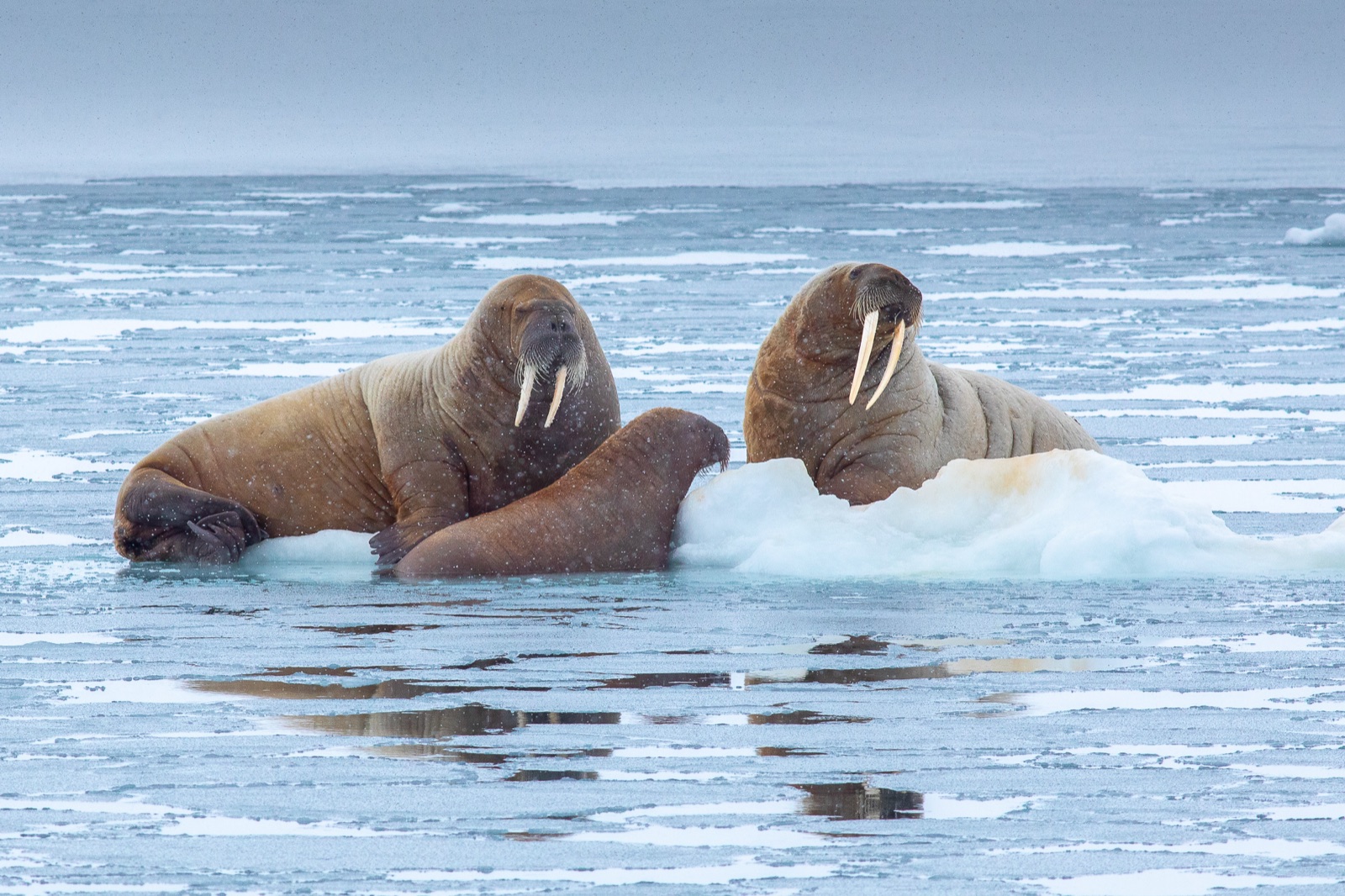
- Walrus safaris by boat. Our Walrus Safari is a full day on a steel boat with a heated cabin, max 12 passengers.
- Glacier fronts in Isfjorden, calving ice and sometimes belugas close to shore.
- Hiking: from easy valley walks like the Wildlife Walk in Bjørndalen to the steep climb to the Fuglefjella bird cliff.
- Kayaking in front of a glacier and summer “dog sledding” on wheels.
What you won’t get: northern lights (the sky is too bright) and snowmobiles (no snow on the routes). More on the summer season in Svalbard in summer: boat safaris, bird cliffs and the midnight sun.
Autumn: the quiet months (September and October)
September and October are the least visited months and the least written about. The midnight sun ends in late August and the days shrink quickly, roughly 20 minutes a day in autumn. The first snow usually dusts the mountains in September. Boat trips run into September, and by October the dark evenings bring the first aurora of the season.
If you like empty trails and don’t need snowmobiles or bird cliffs, it’s a good time for photography and hiking. Just be ready for changeable weather. Polar bears don’t take autumn off either: everything outside town still requires polar bear protection.
So when should you come?
A short version I give to guests:
- You want northern lights: November to February, with late February and early March as the best mix of aurora and daylight for other activities.
- You want snowmobiles, ice caves and a white landscape: February to April. March and April if you want more light.
- You want walrus, whales, birds and hiking: July and August.
- You want both snow and long days: late April. Snowmobiles are still running and the midnight sun has begun.
- You want quiet and don’t mind darkness: November or October.
Whatever you choose, pack for the season you’re actually coming in. Our packing guide for winter vs. summer covers both.
Plan around the weather
One rule doesn’t change with the season: Arctic weather sets the schedule. Flights to Longyearbyen are delayed more often than most people expect, and routes sometimes change on the day because of wind or ice. We always tell guests to arrive one or two days before any tour that really matters to them, and not to book a tight connection home on the same day as a big excursion. How to get here and where to stay has the details on flights via Oslo and Tromsø.
FAQ
What is the best month to visit Svalbard?
For snow activities, March and April give the best mix of deep snow, long daylight and a chance of northern lights early in the period. For boats, walrus and hiking, July and August are best.
Can I see the northern lights and the midnight sun on the same trip?
No. The aurora needs dark skies, which disappear by mid-April. The midnight sun starts around 20 April. Late February to March is the best compromise between aurora and daylight.
Is Svalbard dark all winter?
The sun is below the horizon from late October to mid-February. It is fully dark, even at noon, from roughly mid-November to the end of January. Before and after that, you get blue twilight around midday.
When does snowmobile season on Svalbard start and end?
Roughly February to early May, depending on snow. Snowmobile tours require a valid physical driving licence for the driver.
Is summer on Svalbard warm?
Not really. Expect +4°C to +8°C in July and August, colder on boats and in wind. You still need a warm mid-layer, a windproof jacket, a hat and gloves.

If you still can’t decide, write to us. We live here year-round and we’ll tell you honestly which month fits what you want to see. You’ll find our tours for every season at MyArctic.